

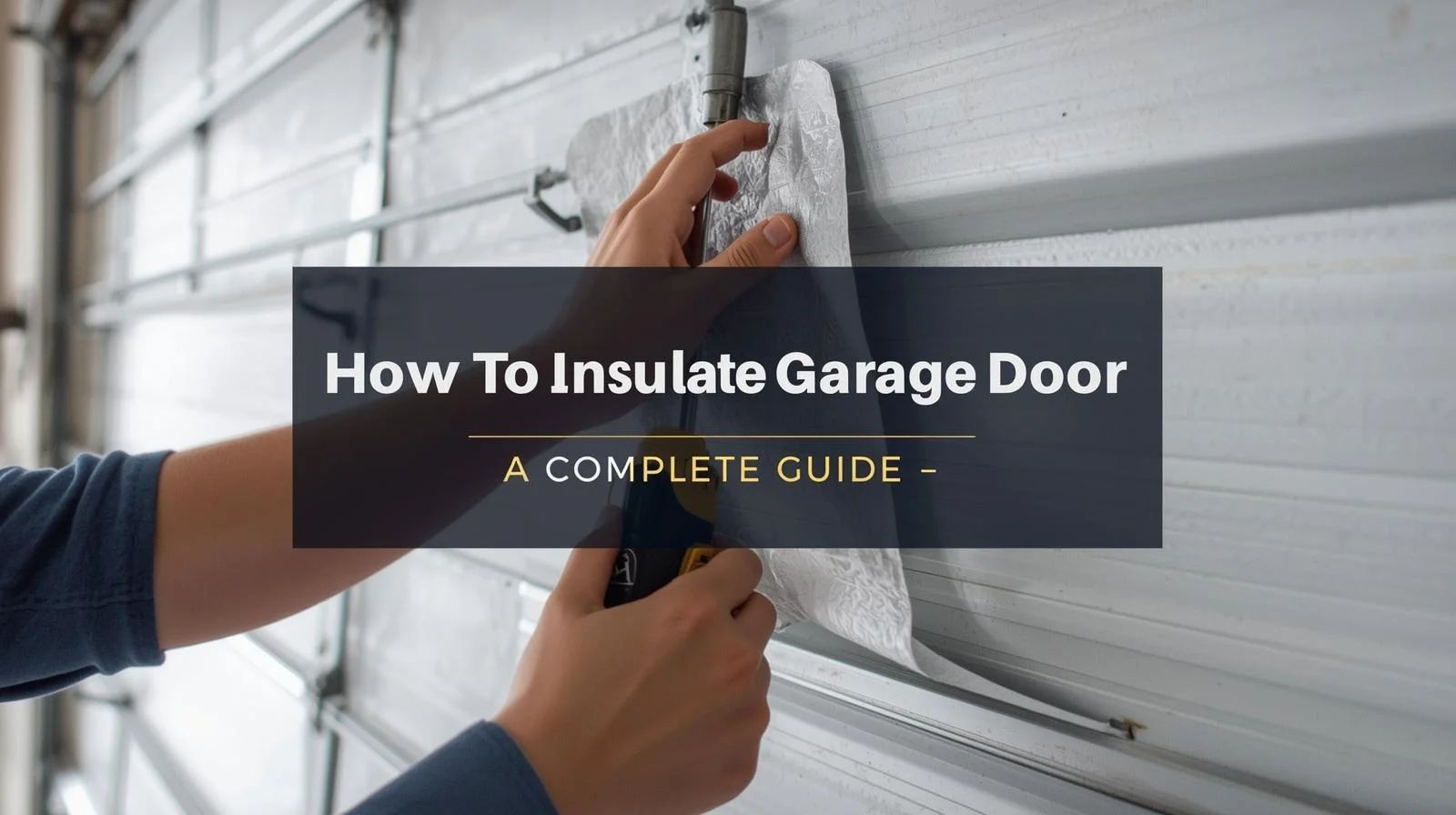
How to Insulate a Garage Door – Complete Guide
Published on December 24, 2025 | By Attic Pro Care, Inc
Garage doors are often the most overlooked surface in a building’s thermal envelope. Not because they are small. Because they move. Because they are mechanical. Because they feel secondary compared to walls, roofs, and windows. That assumption is costly.
A garage door is the single largest opening in most residential and light-commercial structures. The problem starts when this opening is left uninsulated. This makes the gap a pathway for heat loss, heat gain, air infiltration, and noise transmission. The result? Energy efficiency suffers, and inside temperature is not maintained.
This guide treats garage door insulation as a system decision, not an upgrade for better design appeal. The focus is on performance and longevity. Correct installation practices are suitable for professional environments where mistakes are expensive and callbacks are unforgiving.
How Garage Door Insulation Actually Works
Garage door insulation works by slowing thermal transfer across a moving assembly that was never designed to be airtight. Unlike fixed walls, a garage door vibrates, expands, contracts, and cycles multiple times per day. Any insulation strategy that does not slow down thermal transfer will underperform or fail outright.
Heat transfers in three ways. Conduction through the door panels. Convection through air gaps around and within the door. Radiation from direct sunlight striking exterior surfaces. Effective insulation addresses all three simultaneously.
This is where performance metrics matter. R-value measures resistance to conductive heat flow. But this metric is not holistic since it does not account for air leakage, compression, or installation quality. Here is where installation skills really matter. A high-R material installed poorly performs worse than a moderate-R material installed precisely.
The real function of insulation is threefold: control of indoor temperature. Control of air movement and control of moisture behavior. Insulation is simply the tool used to achieve that control.
When Garage Door Insulation Becomes Necessary
Certain garages reveal insulation problems immediately. Others degrade quietly until secondary symptoms appear.
Extreme Fluctuations in Indoor Temperature
Extreme temperature swings are the most obvious indicator. A garage that becomes uninhabitable during summer afternoons or frigid overnight during winter is functioning as a thermal buffer failure. In these cases, the door is often responsible for most of the loss.
Condensation
Condensation is another warning sign. This starts subtly and gradually during the winter months. Moisture formation always happens on the interior face of the door. The cause is warm air contacting cold surfaces. Left unaddressed, this leads to corrosion, mold growth, and material degradation.
Increased Energy Consumption in Adjacent Spaces
Energy inefficiency in adjacent spaces is frequently misunderstood. Rooms sharing a wall with the garage may experience unstable temperatures, forcing HVAC systems to cycle aggressively. The door becomes an indirect load on the entire building.
Excessive Noise Penetration
Noise intrusion should not be dismissed. Thin, uninsulated garage doors amplify sound, disrupting the inner peace. All kinds of sounds are able to penetrate an uninsulated door like traffic, the hum of mechanical equipment, and wind pressure, and even internal vibrations resonate through the panels.
Garage Usage and Functional Requirements
Finally, usage intent matters. Any garage used for workshops, fitness spaces, equipment storage, or mechanical rooms requires insulation to function as intended. In these scenarios, insulation is not a luxury. It is infrastructure.
The Strategic Value of Insulating a Garage Door
Insulating a garage door delivers multiple benefits that extend beyond the garage itself.
Improved Temperature Stability
Thermal stability improves by a large margin, and temperature fluctuations are much slower and gradual. Peak extremes soften. This means reduces strain on heating and cooling systems which definitely reduces the energy bill.
Slows Down Asset Depreciation
Asset protection becomes measurable. Tools remain dry. Vehicles experience fewer thermal shocks. Stored materials degrade more slowly. Sensitive equipment benefits from a more predictable environment.
Reduced Noise Transmission
Less noise penetration because of insulation means a quieter atmosphere and improves focus for the individual inside the room. Insulated doors dampen sound transmission and for workspaces, this benefit alone can justify the upgrade.
Increased Property Value
Property value also improves if an insulated garage door is installed and improves as well. An insulated garage gives the message to the buyer that the property was made in a planned manner and that the construction quality is top-grade. Buyers and tenants increasingly recognize insulated doors as a marker of professional installation and long-term value.
Selecting the Right Insulation Material
Material selection defines performance boundaries. Each option carries advantages and limitations that must align with door design, climate, and usage.
Rigid Foam Board
Rigid foam board insulation remains the most commonly specified solution for sectional garage doors. Its R-value per inch is quite reliable and the moisture resistance of this material is also quite effective. Its structural integrity is also solid making it a preferred choice since the service life is longer. Cutting it is quite easy simplifying the installation time. Moreover, the cutting process itself is precise so door panels can easily fit without compressing or shifting. Foam board performs consistently across a wide temperature range and is compatible with most mechanical retention systems.
Reflective Insulation
Reflective insulation is more suitable for radiating heat rather than a solution for conductive loss. Its foil surface reflects solar energy, keeping the exposed door surface cool. That is why this material is especially effective in hot climates. But it needs an air gap to perform its function. Without that gap, reflective insulation offers limited benefit.
Fiberglass
Fiberglass insulation provides high thermal resistance but requires careful handling. Compression reduces effectiveness. Loose fibers pose contamination risks. Proper containment and facing are essential. When installed correctly, fiberglass performs well, but installation discipline determines success.
Spray Polyurethane
Spray polyurethane foam delivers superior insulation performance but the downside is that installing it permanently alters the door’s weight and flexibility. This material option should only be considered if the door design can support it. Or if the modification to the doors can be done easily. Retrofitting spray foam onto existing doors often introduces mechanical complications that interfere with functionality.
No insulation material is universally superior. Performance depends on context. Climate, door construction, hardware capacity, and client expectations must guide selection.
Preparing the Garage Door for Insulation
Preparation determines whether insulation performs as designed or becomes a liability.
The interior surface of the door must be clean and dry. Dust, oil residue, and manufacturing films make adhesive application uneven, so surface preparation is a must.
Accurate measurement should be the next phase. Each panel should be measured independently. Manufacturing tolerances vary, and assuming uniformity leads to poor fit. Insulation should be cut slightly undersized to allow expansion without bowing panels or stressing hardware.
Hardware clearance must be evaluated at this stage. Rollers, hinges, struts, and track proximity limit allowable insulation thickness. Ignoring these constraints results in binding, noise, or premature mechanical failure.
Preparation also includes assessing door condition. Some common problems that can emerge after assessment include bent panels, fatigued springs, or undersized openers. In such cases, insulation should be postponed until mechanical issues are resolved.
Precision here prevents rework later.
Step-by-Step Garage Door Insulation Installation
Garage door insulation must be installed as a controlled sequence, not as a single task. Each step builds on the previous one. Skipping steps or rushing transitions is where mechanical problems begin.
Step 1: Position the Door Correctly Before Starting
The number one precaution to take is to ensure that the garage door is fully closed before insulation is installed. Once the door is shut, each panel is aligned automatically and this prevents misalignment once weight is added. To prevent the shifting of door position during the installation procedure the door should be locked or disconnected from the opener so there is no accidental movement during installation. Working on a partially open door introduces unnecessary risk and will lead to misaligned insulation panels. Stability is the highest priority here.
Step 2: Insert or Mount Insulation One Panel at a Time
Insulation should always be installed panel by panel, never across multiple sections at once. Each panel behaves independently as the door moves, and insulation must respect that movement.
Position the insulation so it sits flat within the recessed panel area. Take care so there is unnecessary forcing or bending. The material should rest naturally against the surface without compression. Compressed insulation loses effectiveness and creates stress points that lead to panel distortion.
The application of adhesives, should be done with precision for an even coverage. , Mechanical retainers should be positioned away from hinges, rollers, and track paths. Any interference here will show up later as noise, binding, or premature wear.
Step 3: Maintain Clearance Around Moving Hardware
Throughout installation, maintain visual and physical clearance around hinges, roller stems, and horizontal struts so that installation does not hinder the movement of the door.
After each panel is insulated, pause and manually articulate that section. Confirm free movement. If resistance is felt, correct it immediately. Do not proceed to the next panel until movement is smooth.
Mechanical awareness at this stage prevents opener strain and long-term hardware failure.
Step 4: Secure Insulation Without Adding Tension
Once properly positioned, insulation should be secured only enough to prevent shifting. Over-securing creates tension. Excessive tension is the main cause of to panel bowing and rattling during operation.
The goal is restraint. The insulation should stay in place during door movement without fighting the door’s natural flex. If the material requires excessive fastening to remain stable, the fit is incorrect.
Step 5: Seal Gaps After Panel Installation Is Complete
Sealing should begin only after all panels are insulated and confirmed to move freely. For adequate sealing, the sealing techniques are applied to the perimeter of the door and not the panel seams. The sealing procedure involves the application of weather stripping along sides, top and bottom edges of the door to block air flow. This step prevents heat loss by convection and stops drafts that insulation alone cannot address. Sealing should compress lightly when the door closes. Over-compression shortens seal life and increases resistance.
Step 6: Test Door Movement Before Reconnecting the Opener
Before reconnecting any automated opener, manually open and close the door several times. Listen closely. Feel for resistance. Watch for uneven movement or panel flex.
If the door does not move smoothly by hand, it will not move safely under power. Address balance or clearance issues immediately.
Only after smooth manual operation is confirmed should the opener be reconnected and tested.
Step 7: Perform Final Operational Checks
Once powered operation resumes, cycle the door multiple times. Observe travel speed. Listen for new sounds. Keep your eyes open for any sign of vibration or hindered movement.
Any abnormal behavior indicates an imbalance or interference and must be corrected before the installation is considered complete. Insulation should enhance performance, not compromise it.
Testing and Verifying Door Performance After Insulation
After insulation, the door must be tested to see if it can handle the daily frequent usage.
Balance testing ensures springs compensate for added weight. An unbalanced door strains openers and accelerates component wear. So, adjustments should be made before reconnecting automated systems.
Your next step should be operational testing involves multiple open-close cycles. Listen for vibration. Observe panel alignment. Confirm smooth travel through the full range of motion.
Thermal verification occurs over time. Immediate temperature changes may be noticeable, but true performance reveals itself through stabilized conditions across days and weeks.
If you are doing the installation for a client, educating them is part of testing. Clearly communicate to them about the limitations and maintenance requirements to reduce misuse risk and build confidence in the installation.
Climate-Specific Garage Door Insulation Considerations
The type of insulation required is determined by the climate of the region.
In cold climates, the goal is to achieve heat retention and condensation control. To tackle this, insulation should have vapor barriers and airtight sealing. Moisture management is vital for preventing corrosion and mold growth.
In hot climates, the emphasis is on radiant heat rejection. Here, reflective insulation and exterior surface considerations reduce heat absorption and transfer.
Mixed climates require an insulation that is adaptable. Materials must cope with expansion, contraction, and moisture cycling that come about with temperature changes, without degrading.
Professional judgment matters here. In some cases, recommending door replacement rather than insulation retrofit protects long-term performance and client satisfaction.
Cost, Time Investment, and Long-Term Value
Garage door insulation occupies a favorable position in cost-benefit analysis.
Material costs are moderate. Labor requirements are predictable. Installation timelines are short compared to full door replacements. Energy savings accumulate over time. Comfort improvements are immediate. Asset protection delivers indirect but meaningful value.
For installation professionals, insulation represents a responsible upsell. It solves measurable problems and reinforces technical expertise without overselling.
When positioned correctly, insulation upgrades strengthen client relationships rather than strain them.
Key Precautions for Proper Garage Door Insulation
- Garage doors can be insulated after installation when mechanical condition permits. Added weight must always be accounted for.
- Properly installed insulation does not damage openers. Improper balance does.
- Insulating the door frame and sealing air gaps is as important as insulating the panels themselves. Air leakage undermines thermal performance regardless of material quality.
- Insulation systems can be modified or removed when installed thoughtfully. Flexibility should be preserved whenever possible. Clear, confident answers build credibility.
Conclusion
Garage door insulation rarely attracts attention. It does not change exterior aesthetics. It does not announce itself. Instead, it works quietly. Stabilizing temperatures. Reducing noise. Protecting assets. Improving energy performance without fanfare. When installed with precision and judgment, it elevates the entire structure. When rushed or improvised, it creates friction and failure. Professional installation is not defined by speed. It is defined by restraint, foresight, and respect for the system as a whole. Garage door insulation is not about filling panels. It is about restoring balance.